If we look at architecture, which is often inspired by nature, we will see that some of the strongest and most enduring atructures are based on the concept of the arch. It can bear tremendous weight.
"Despite the arch’s delicate appearance, it is remarkably rigid and strong, especially with the extra support commonly placed along its sides. An arch derives its strength directly from its shape. Downward force from the top of an arch is carried along the curving form all the way to the base." - George Jackson from Physics-network.org
I'm sure you've looked at your feet from time to time and noticed you too have an arch. In fact you have 3 very important arches in your foot, which create a beautiful dome on which the rest of you stands, walks, jumps, runs and maybe even dances. These structures are amazingly resilient, dynamic and powerful. This is why it might be a great idea for you to consider them, both on and off the mat.
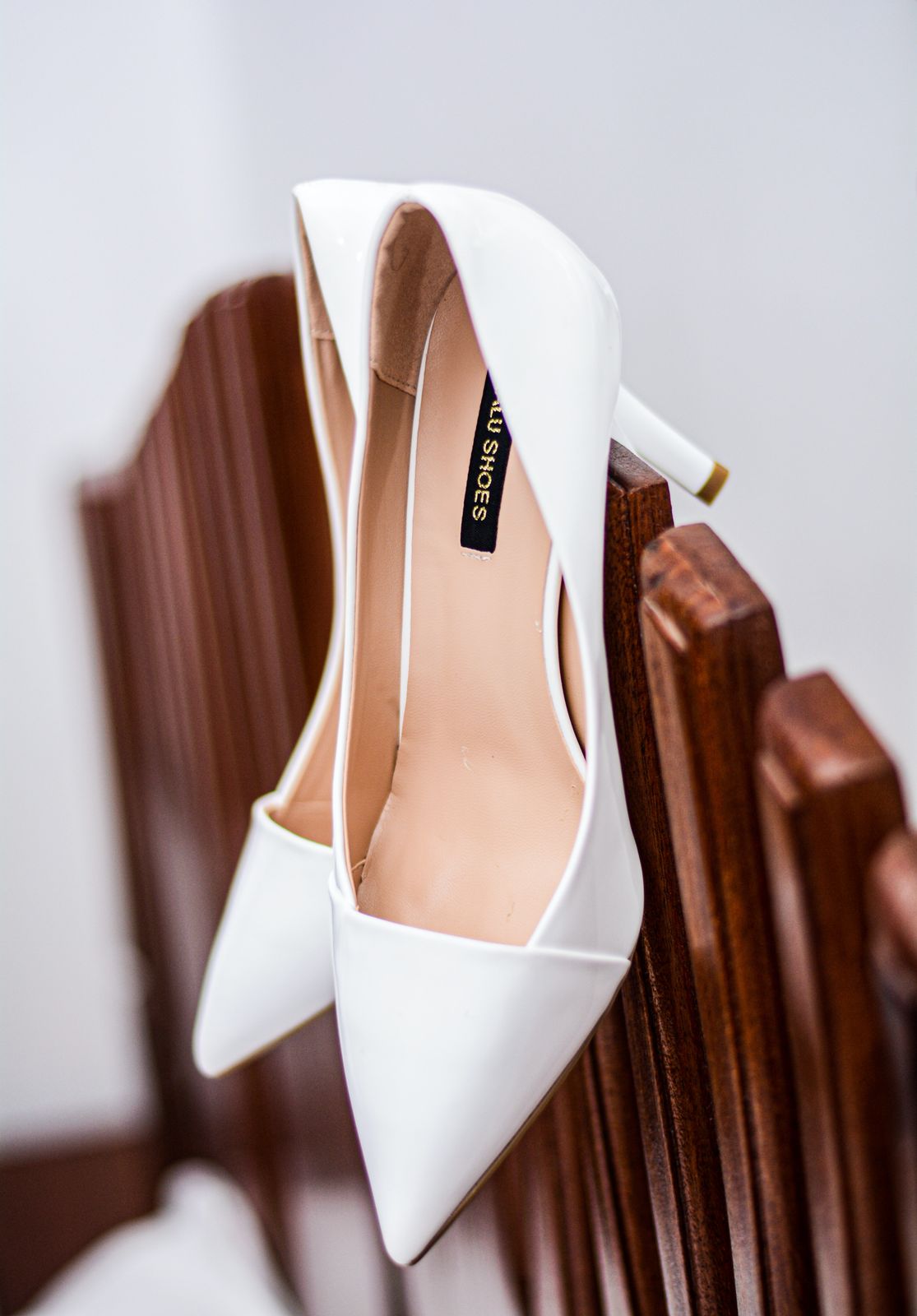
Consider the types of shoes you wear. Are they the shape of your foot?....
Now, no judgement here....but I'm going to go out on a limb here and guess your foot doesn't look like this....LOL At least it shouldn't.
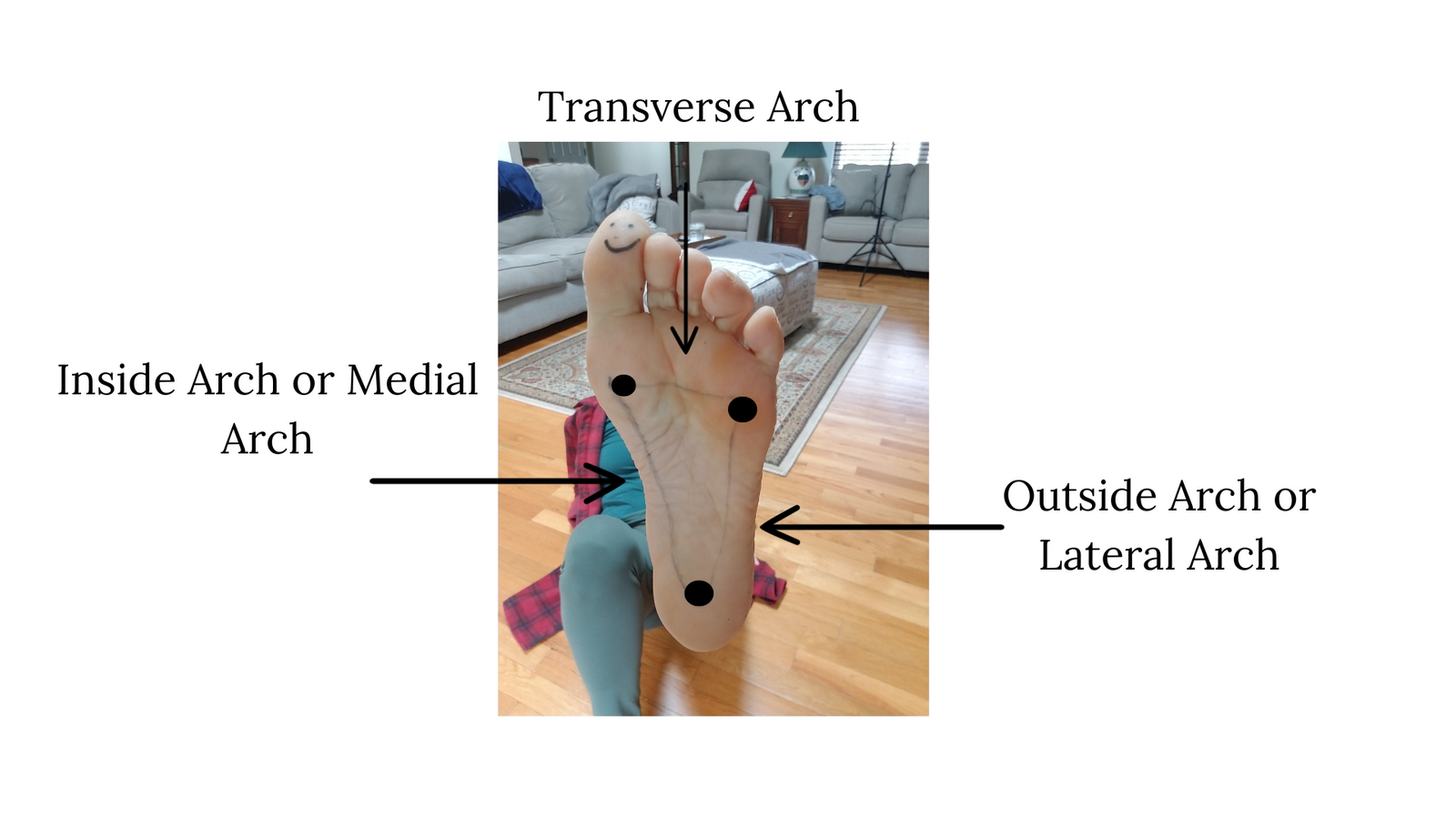
Seriously though, there are 3 very important arches in the foot:
The inner arch or medial arch, which runs from the mound of your big toe to the heel.
The outside arch or lateral arch, which runs along the outside edge of the foot, from the base of you pinky toe to the heel.
The transverse arch, which runs across the foot from the mound of the big toe to the mound of the little toe.
So, when we are instructed to stand on all 4 corners of the feet, which isn't really 'wrong', it isn't entirely accurate. The feet are less like a rectangle and are a little more like a triangle. When you balance evenly between the three dots shown in the image above, and you engage the muscles within the foot that support these arches, You're creating a beautiful dome on which to stand.
How can you really take this into our practice? By practicing Tadasana.
Tadasana, or Mountain Pose, is the most foundational of all standing postures. It can be practiced with the feet together, but to feel this, I would recommend taking your feet hip-width apart. And see for yourself, can you find all the 3 dots and see if there is a greater sense of balance?
Notice what happens with your knees? Are they rolling in our out? Try to rotate your thighs and knees to face forward. If this hurts your knees, please stop!
Sometimes, but not always, the reasons the knees roll in when we stand, is related to the arches. If your inner arch collapses or you have a low arch, you can try grounding through the mound of the big toe and heel, and lift your inner arch. Try to balance on a little more on the outer edge of the heel.
If you have a really high arch, you might tend to roll out on the feet and stand more on the ourter edge of the foot. If that's true for you, you can try lifting the outer edge of the foot a bit and grounding more through the mound of the big toe and inner heel.
Take this information off the mat as well. Take a look at the bottom of your favorite shoes, do you see uneven wear in the sole and/or treads? This can also give you some clues regarding of how you move. See if you can play with this and utilize this information as you move thoughtout your day.

 OfferingTree